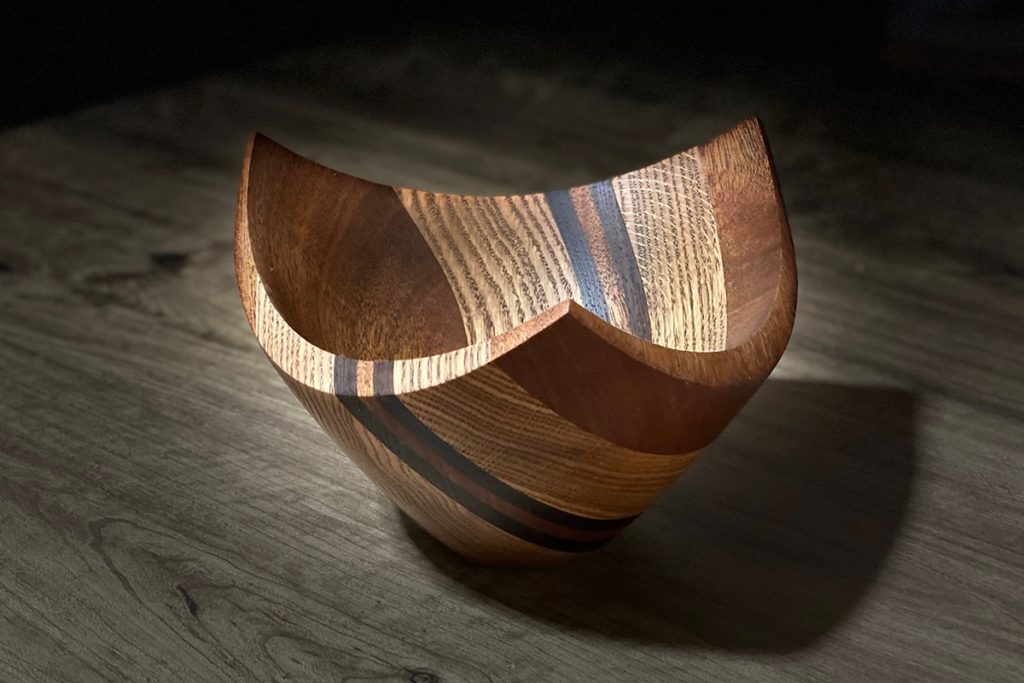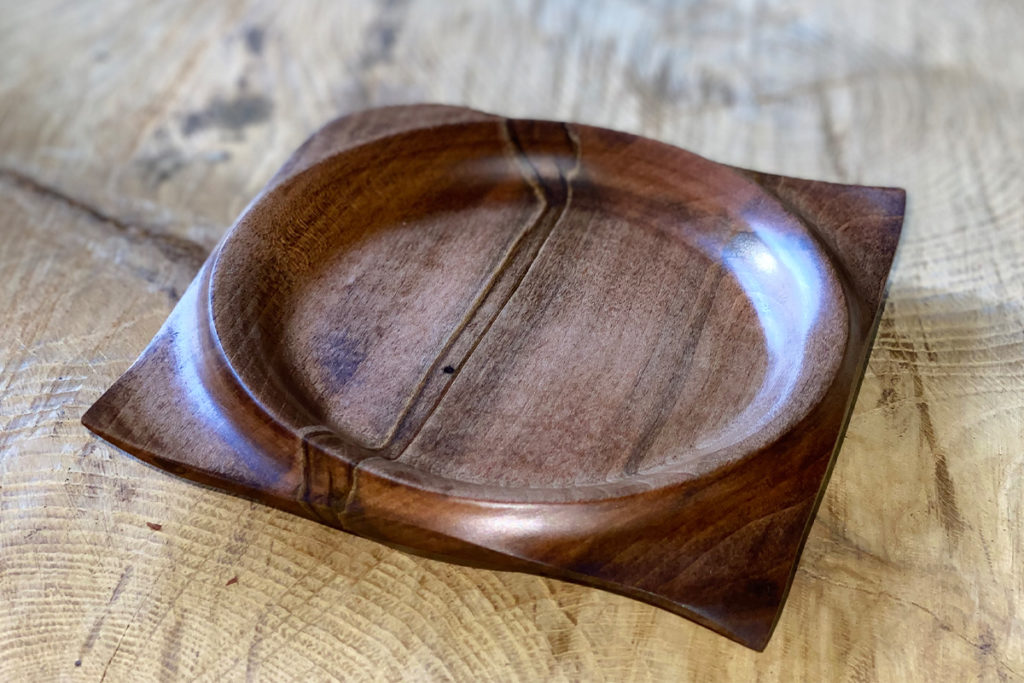
Even though woodworking has been my lifelong passion, four years ago I felt the need to spread my wings a bit and learn something new.
I decided to try woodturning using a lathe. From day one I realized I was going to get nowhere without digging deep into my wallet. For a beginner in lathe work, there is a tool for almost every different type of cut you can make. And, you have to know what you are doing with each tool before you present it to a piece of wood spinning at 4000 RPMs on a spindle. Each tool needs for the user to present it to the wood differently and with great knowledge and confidence. Over the years, I’ve fallen in love with this type of woodworking. My only regret is that I waited so long to learn the skill. I quickly discovered that this skill was my true calling.
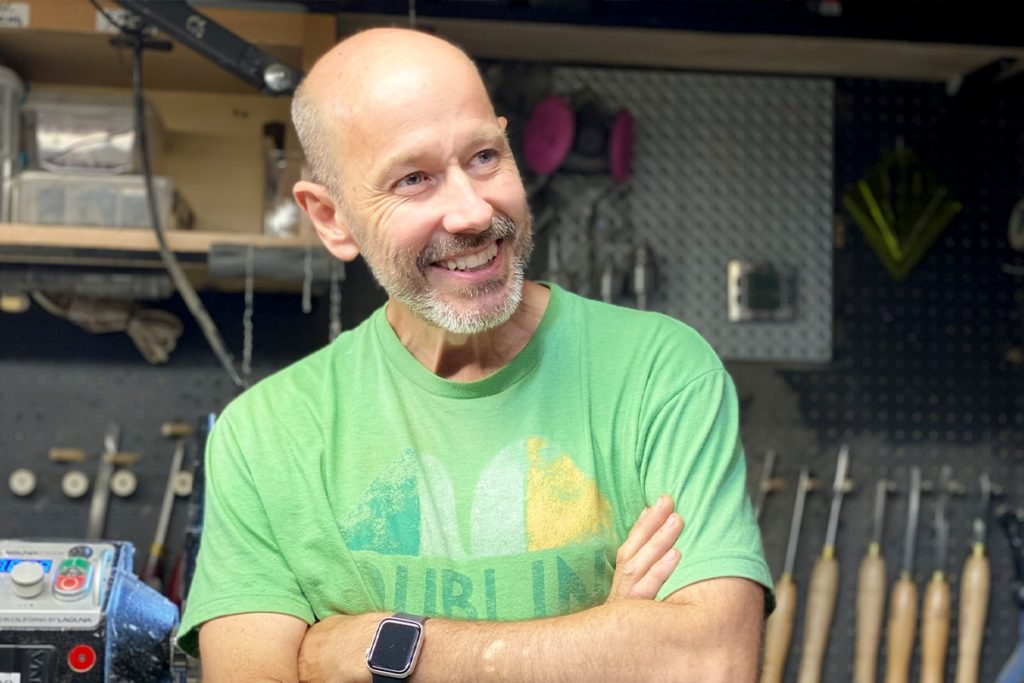
“…woodworking has been my lifelong passion…”
Lots of (sharp) Tools
I quickly learned that you need good tools, you need many tools, and you need sharp tools to be safe. But, I also saw right away the vast array of beautiful items that can be made using a lathe, which made the investment worth it. While lathe work is part of woodworking, it’s a whole different spectrum with a need for an entirely different set of skills. If you have a sharp tool and some knowledge of what you’re doing you can make some pretty amazing works of art. Sharp tools mean less work because there’s far less sanding once you’re done turning the project. I also found if you’re good enough and your tools are sharp enough that there are times you can go right to 400 grit sandpaper. And, sometimes you can be finished once the turning is done with no need for sanding at all.
Hard Woods for Success
Working with more of the dense and harder woods like maple, oak, and different types of imported woods, is a key to success when attempting more advanced projects. One of the more difficult but important things to do is to know the type of wood you’re working with. Which species of the tree are you working with? Is it maple or is it silver maple? And, is it an open grain (like oak) or a more closed grain (like ivory, epi, or maple). Knowing the history of a wide variety of trees and its inhabitants is very important to success in wood turning, and to achieve the results you want, especially with more advanced projects.
Endless Possibilities
The projects I’ve gravitated towards most have been the ones that were anything but the norm, many of them were not even round, go figure! I began with more advanced projects like lidded boxes and three winged bowls with great success. Most people think of bowls when they think of woodturning lathe work, but I’ve found there is a wide world of items out there just waiting for you to put your own spin on, with a little imagination. I turn, and turn, and turn, and never seem to find enough time in the day to do all the things I want to do. The possibilities seem endless.